TL;DR: Putting your decoys 30 yards out in an open field gives a tom every reason to “hang up.” To close the gap, move your decoys to the field edge and face your hen away from the opening. This forces the tom to come in closer before the hen “disappears.”
The 60-Yard Frustration
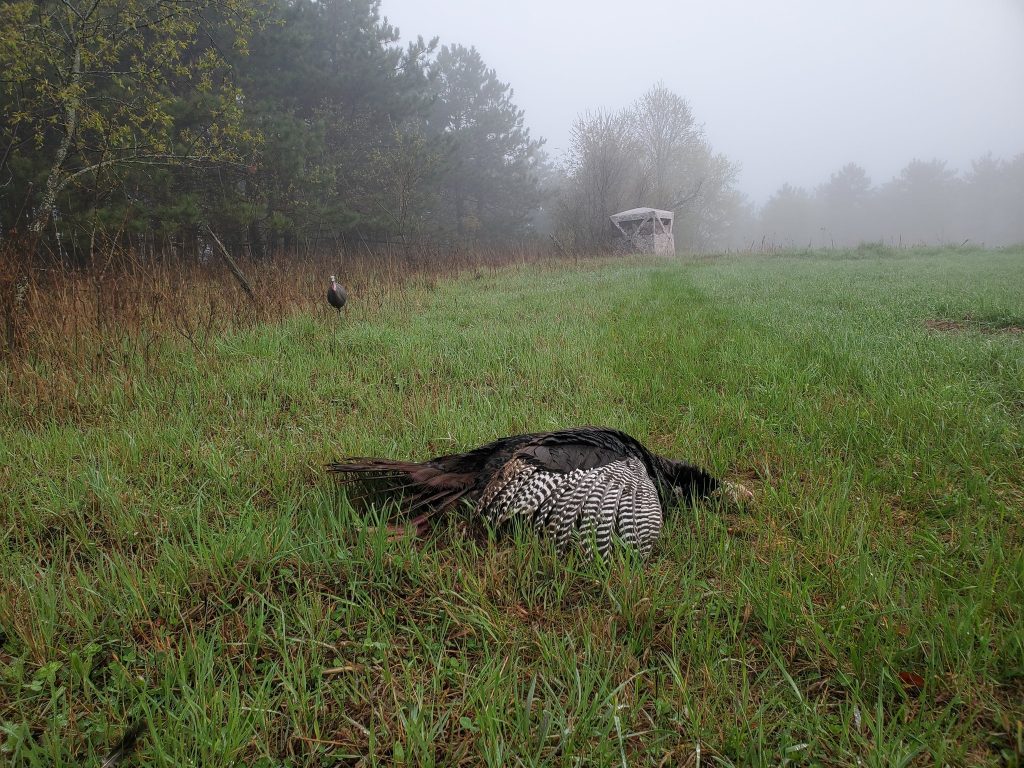
We’ve all been there. You’re set up on the edge of a beautiful Wisconsin hay field. You see a big long beard step out of the pines. He sees your decoys, starts strutting and gobbling, and then… he stops. He’s at 60 yards—just out of reach for a clean shot—and he won’t budge. He’s waiting for that hen to come to him. If you’re tired of losing birds to the “hang-up,” you don’t need a new call; you need a new decoy strategy.
The Mistake: The “Middle of the Field” Trap
Most hunters think that putting a decoy staight out in front of the blind makes it more visible. While that’s true, it’s also a tactical error.
- The Problem: A Tom expects the hen to do the work. If he can see her clearly from 100 yards away, he has no reason to get closer.
- The Result: He struts just out of range, waiting for her to move, and eventually loses interest or gets pulled away by a real hen.
The Best Decoy Placement for Field Edge Hunting.
In this video, I break down a setup that uses turkey psychology against them. Instead of fighting the “hang-up,” we prevent it by changing the decoy’s “story.”
1. Hug the Edge
Position your decoy just 5-10 feet off the field edge or right against the brush. By reducing the visibility from certain angles, you force the Tom to move closer to keep her in sight.
2. The “Leaving the Party” Move
Face your hen decoy toward the woods, not towards the field. To a Tom, this looks like a hen that is disinterested and about to disappear into the timber. If he wants to catch her, he has to act fast.
3. Tighten the Distance
By setting the decoy off to the side of your blind rather than straight out in front, you naturally pull the bird into the “Strike Zone.”
Watch the Full Setup in Action
Check out the video below to see exactly how I positioned my decoys during a rainy morning hunt in my Otter Creek hay field.