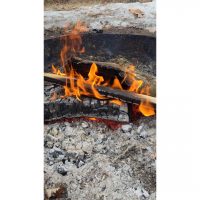
Fire is one of those basic skills I never get tired of practicing. There’s just something satisfying about using what the woods already give you instead of relying on store-bought shortcuts.
In this video, I’m out looking for fatwood — one of the best natural fire starters you’ll ever find — and showing just how easy it is to use once you know where to look.
🔥 Finding Fatwood — Nature’s Best Fire Starter
One of the things I love about spending time in the woods around Otter Creek is learning what nature already provides — especially when it comes to starting a fire. You don’t need fancy gear, chemical fire starters, or gimmicks. Sometimes the best tool is already hiding inside an old pine stump.
That’s where fatwood comes in.
If you’ve never used fatwood before, it’s a game changer. It’s one of the most reliable natural fire starters I’ve ever messed with, and once you know how to spot it, you’ll start seeing it everywhere.
🪵 What Fatwood Is (and Why It Works)
Fatwood comes from pine trees. When a pine dies, gets damaged, or is cut down, the tree pushes its resin into the heartwood, roots, and lower limbs as a way to protect itself. Over time, that resin soaks deep into the wood.
What you’re left with is dense, dark, resin-soaked pine that lights easily and burns hot. That sticky pine resin is what makes fatwood such an effective natural fire starter, even in wet or cold conditions.
🌲 Where I Look for Fatwood
I’ve had the best luck finding fatwood in these spots:
- Old pine stumps
- Roots of fallen or rotted pine trees
- The base of dead pine limbs
- Wind-blown pines that have been down for years
If it smells strong like pine sap and looks darker or heavier than normal wood, you’re probably in the right place. Sometimes you don’t even need to split it — the smell alone gives it away.
🔨 How I Harvest Fatwood
I keep it simple. Most of the time I’m using a saw, hatchet, axe, or sturdy knife — whatever I’ve got handy.
I’ll saw or split into a stump or limb until I hit that orange or reddish resin-rich wood. Once I find it, I break it down into smaller sticks that are easy to carry or store. Fatwood is heavy stuff, so you don’t need much.
When it’s time to use it, I shave off thin curls or split it into small matchstick-sized pieces. Those shavings will catch a spark fast.
🔥 Why Fatwood Earned a Permanent Spot in My Fire Kit
There’s a reason fatwood has been used for generations:
- It lights easily with a match or ferro rod
- It burns hot and long enough to catch kindling
- It works even when everything else is damp
- It stores forever and never goes bad
Whether I’m camping, practicing bushcraft skills, or just starting a backyard fire, fatwood makes the job easier and more dependable.
🧭 A Few Fatwood Tips I’ve Learned
- Trust your nose — strong pine smell usually means good resin
- Keep your blade sharp (fatwood is tougher than it looks)
- Shave it fine for quick ignition
- Don’t waste it — a little goes a long way
🏕️ Final Thoughts
Fatwood is one of those old-school woods skills that just makes sense. It’s simple, reliable, and free if you know where to look. Once you find your first good stash, you’ll never walk past a pine stump the same way again.
If you spend any time outdoors — camping, hunting, hiking, or just enjoying a fire at the end of the day — learning how to find and use fatwood is a skill worth keeping.